
Effectively managing neurodivergent employees is one of the many challenges supervisors must navigate as employees may require a different management approach to do their best work. As neurodiversity increasingly becomes a focus for employees and employers, supervisors can support neurodivergent employees while working to meet the company’s goals.
There are legal guidelines and considerations to keep in mind, while offering support and showing empathy to employees. Be mindful not to diagnose, make assumptions, or ask about employees’ perceived or known conditions.
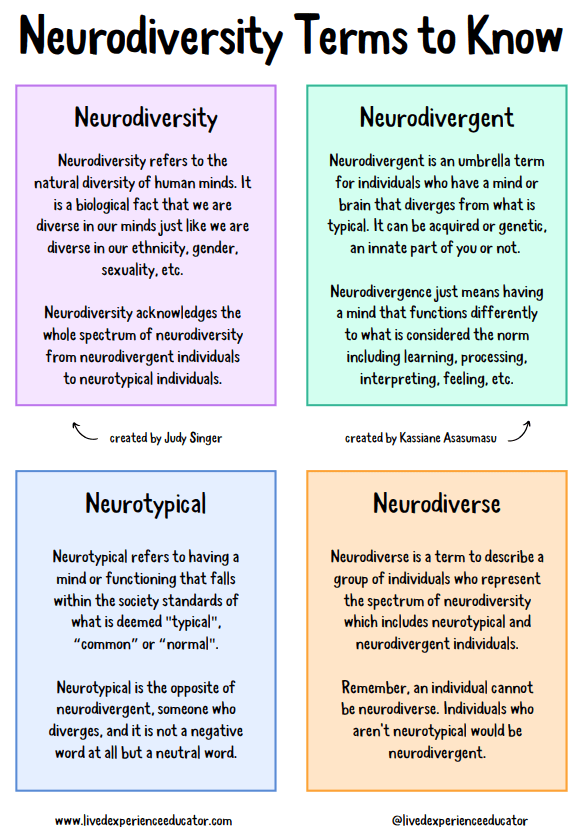
What Is Neurodiversity?
Neurodiversity describes people whose brains work differently, meaning a neurodivergent person has different strengths and struggles from neurotypical people, according to the Cleveland Clinic. This doesn’t mean neurodivergent employees are less qualified, capable, or likely to succeed. It means they may need to take another approach to their work or require different support from their supervisor.
It isn’t a medical diagnosis. Neurodivergent employees may have diagnosed conditions, but neurodiversity is a spectrum and it focuses on traits and patterns of behavior, learning, and thinking, according to the Associated Clinic of Psychology.
Neurodivergent Conditions Employees Experience
Up to 20% of people worldwide are neurodivergent, according to experts’ estimates. With neurodiversity impacting this portion of the population, it’s likely you know or work with someone who’s neurodivergent.
Neurodiversity is different for everyone who experiences it, and the symptoms and impacts vary. People can experience neurodiversity as the result of an injury, genetically, or for any reason.
These are some neurodivergent conditions impacting working people:
- Attention-Deficit/Hyperactivity Disorder (ADHD)
- Autism
- Dyspraxia
- Executive disfunction
- Learning disorders like dyslexia
- Mental health conditions
- Sensory processing disorders
Neurodiversity isn’t a disability, but the conditions under this umbrella term may be. When legally classified as such, the Americans with Disabilities Act and the Accessible Canada Act provide employees protections against discrimination and harassment, and rights to reasonable accommodations at work. Under these acts, employees also have the right to keep their conditions private.
Supervisors should be familiar with local laws. To ensure compliance, consult your HR representative or department, or obtain legal advice.
How Neurodivergence Impacts Work
Neurodivergent employees face unique challenges, but they also bring new skills and perspectives to the workplace. The Employer Assistance and Resource Network on Disability (EARN) lists these skills as some which companies across industries can benefit from:
- Innovation
- High concentration
- Keen accuracy
- New approaches to problem solving
- Persistence
- Remembering detailed, factual information
The Job Accommodation Network cites challenges neurodivergent employees may face, including:
- Time management
- Social skills and interacting with coworkers
- Stress management
- Organization
- Concentration
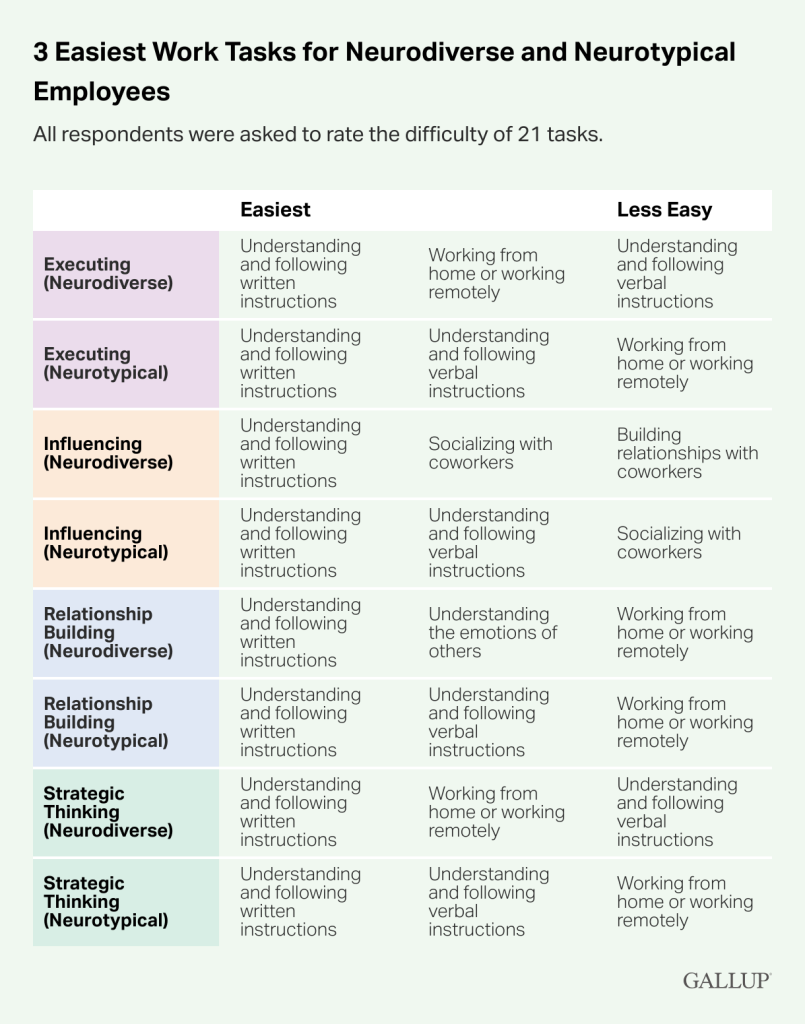
Workplaces are generally not built to accommodate neurodivergent employees. While neurodivergent employees may need to be managed differently or take a different approach to their work, they often share similarities with neurotypical employees. Gallup surveyed neurodivergent and neurotypical employees about their three easiest work tasks.
Managing Neurodivergent Employees
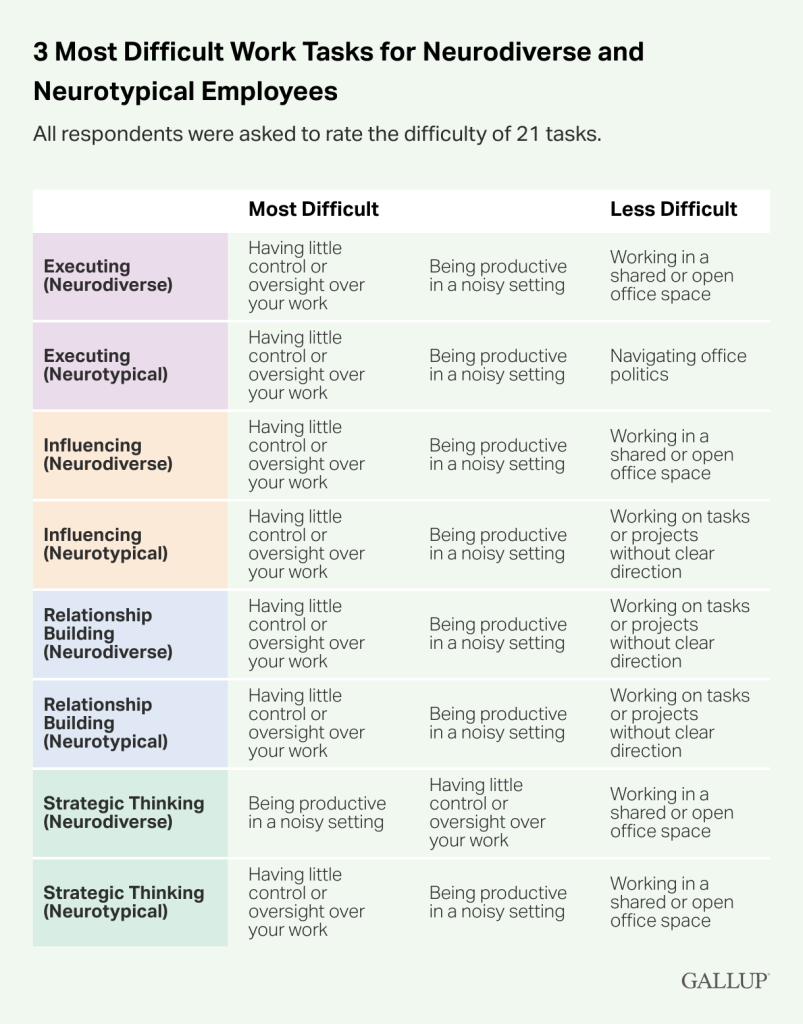
Having insights into the most difficult tasks for neurodivergent employees can provide supervisors guidance on ways to support them. Gallup also surveyed employees about their most difficult tasks.
To best manage neurodivergent employees, experts recommend supervisors become educated on neurodiversity and support employees’ strengths. EARN provides resources for supervisors on accommodating, including, and hiring neurodivergent employees.
- Training for managers which includes working with neurodivergent people, how to assess employees’ needs, and how to optimize their contributions.
- Discussing expectations and access to resources
- Mentorship for neurodivergent employees
The McKinsey Talks Talent podcast features an interview with Dr. Lawrence Fung, associate professor of psychiatry and behavioral sciences at Stanford University and the director of the Stanford Neurodiversity Project. The conversation includes ways to help neurodivergent employees succeed.
Speaking with employees who may need additional support is a good starting point. Masking, suppressing neurodivergent traits, can make it difficult for supervisors to identify challenges employees face without the employees naming their struggles. Employees may mask intentionally or subconsciously from the belief that it will improve perception of them at work. Psychology Today shows masking is a risk to health, leading to burnout, mental health issues, and erosion of self, among other negative impacts. This underscores the need for inclusive workplaces and supervisors knowledgeable about how to support neurodivergent employees.
Share Company-Provided Resources
If your company provides resources or benefits that support neurodiversity, proactively share information on how team members can access these services. By communicating this information early, you help make neurodiversity-related resources easily available and demonstrate inclusion without making anyone feel singled out.
These benefits or resources may include:
- Access to counseling
- Employee assistance program (EAP)
- Employee resource groups (ERGs)
- Flexible schedules
- Mental health days
- Mentoring
- Sensory-friendly workspaces
Balancing Empathy and Performance
Supporting neurodivergent employees effectively requires maintaining professional boundaries. Supervisors should foster respectful workplace relationships and engage HR or legal professionals when needed to uphold those boundaries. The aim is to empower neurodivergent employees to thrive in their roles by offering appropriate support and reasonable accommodations.
Clear communication of expectations and addressing performance matters with sensitivity is essential. This balanced approach demonstrates empathy toward neurodivergent employees while ensuring a productive and inclusive work environment for all.
Professional Mental Health Support
If neurodiversity is affecting mental health or work, it might be time to schedule a visit with a mental health professional. Healthcare providers can refer you to professionals, or you may find support through organizations that offer hotlines.
U.S.:
- Substance Abuse and Mental Health Services Administration’s national helpline: (800) 662-HELP (4357)
- Suicide and Crisis Lifeline: 988 (call or text)
- National Alliance on Mental Illness: 1-800-950-6264 (call) or text “NAMI” to 62640
Canada:
- Mental health resources: 211 (call or text)
- Suicide and Crisis Lifeline: 988 (call or text)
- Provincial and territorial resources
Disclaimer: The information provided is for informational purposes only and is not a substitute for professional medical advice. For specific advice, consult your physician or other qualified health provider. The information provided is for general informational purposes only and does not constitute legal advice. For specific legal advice, please consult a qualified attorney.
About Express Employment International
Express Employment International supports the Express Employment Professionals franchise and affiliated brands, including Specialized Recruiting Group and Express Healthcare Staffing. The Express franchise brand is an industry-leading, international staffing company with locations across the U.S., Canada, South Africa, Australia, and New Zealand. For more information, visit ExpressPros.com/Employers or ExpressPros.ca/Employers.