Whether you don’t meet education requirements or you’re trying to pivot your career, applying for a job with a strong, skills-based resume can help you reach your goal. Optimizing your resume for the job you’re applying to, showcasing your strongest experience and skills over education, and getting creative with proving your knowledge can set you apart.
Some employers are shifting from education-based hiring to skills-based hiring. This means education requirements, like college degrees, may be waived. Even if a degree is listed on a job posting, it may be worthwhile to apply if you’re otherwise a strong candidate. For the right fit, employers may make exceptions to the posted qualifications.
What to Include on a Skills-Based Resume
Resume formats and information to include vary across industries. Take this general information into consideration, but invest in optimizing your resume for the industry and specific job you’re applying for.
When working on your resume, don’t get caught up on what you don’t have; invest in highlighting the skills and experience you do have.
On your resume, include the basics:
- Name
- Phone
- Link to your portfolio, if applicable
- References are optional to list. Include your contacts, note references are available upon request, or don’t include this part.
The sections that follow should be detailed, yet concise, and include keywords from the job posting. Tailor your resume for the industry and job you’re applying for; these sections may be different depending on the field, but experience and skills are typically the most critical.
Professional Summary
This is like a written, expanded version of your elevator pitch, summing up your professional life and who you are in the scope of your career.
Experience
Clearly describe the scope of your current and past work, use action-verbs, and include metrics. This section shows that you’re sufficiently experienced for the job you’re applying for, even without meeting education requirements.
Skills
This is a more detailed, niche continuation of your experience section. List skills you have that are applicable to the role and match the keywords from the job description when possible. Be prepared to answer questions from recruiters about how you learned these skills and how they relate to your experience.
Education
It may seem counterintuitive, but even if you don’t have a degree, it can be beneficial to include an education section on your resume. Removing the word “education” runs the risk of having your resume disqualified by automated screening systems if education is a job requirement.
Instead, use the education section to showcase professional development through advanced training, workshops, courses, certifications, or even industry memberships that provide you with continuing education. The goal is to demonstrate continuous learning and development in lieu of a degree. If you worry about an education gap or feel held back by not having a degree, a certification can bridge the gap.
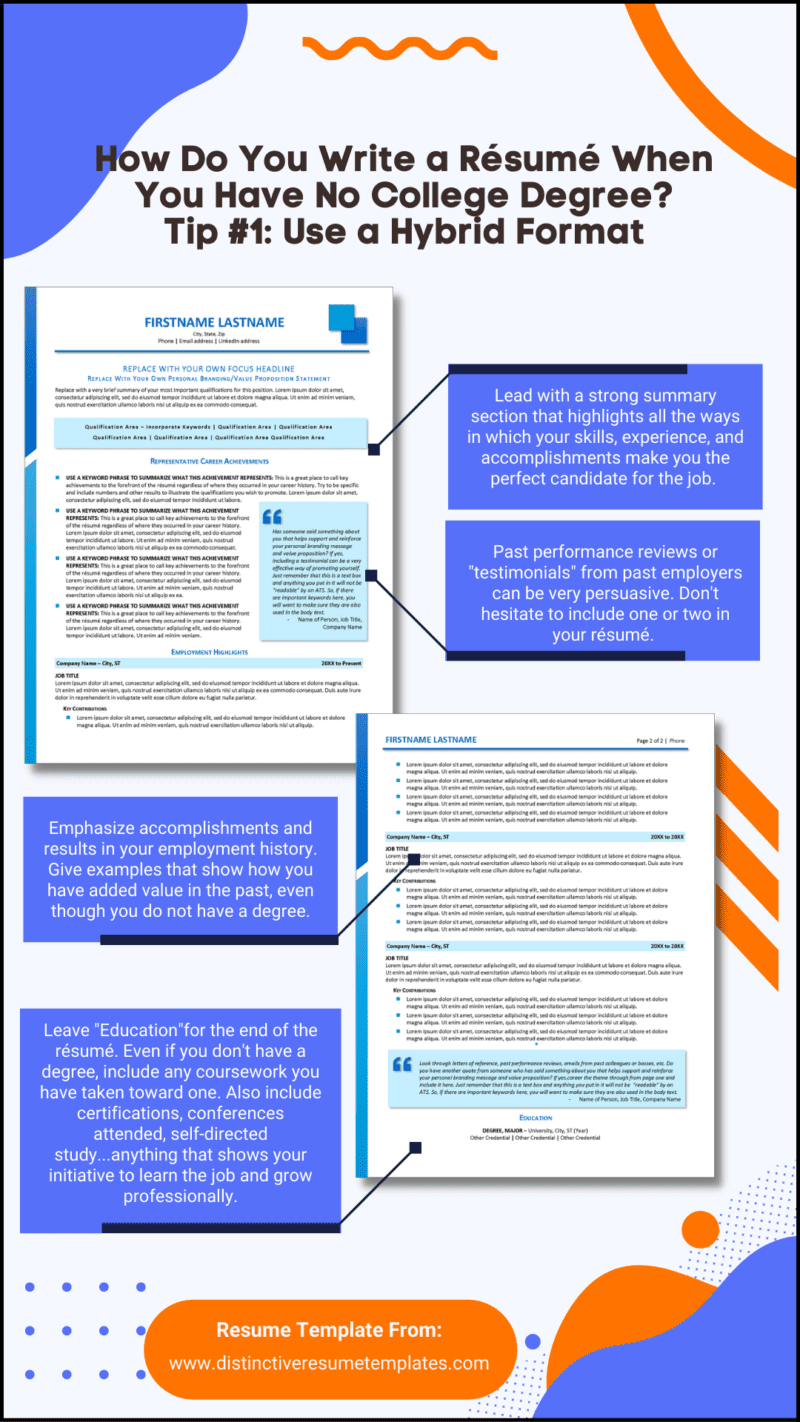
Courtesy of Distinctive Web
Success Without a Degree
A degree isn’t the only key to landing a good job. Skills and experience can be just as effective, and optimizing your resume to feature them is one way to stand out in the job search. The absence of a degree doesn’t determine your job opportunities; leverage the qualifications and resources you have to find success.
About Express Employment Professionals
At Express Employment Professionals, we’re in the business of people. From job seekers to client companies, Express helps people thrive and businesses grow. Our international network of franchises offers localized staffing solutions to the communities they serve across the U.S., Canada, South Africa, Australia, and New Zealand, employing more than 11 million since its inception. For assistance with your job search, visit ExpressPros.com/Job-Seekers or ExpressPros.ca/Job-Seekers.
